
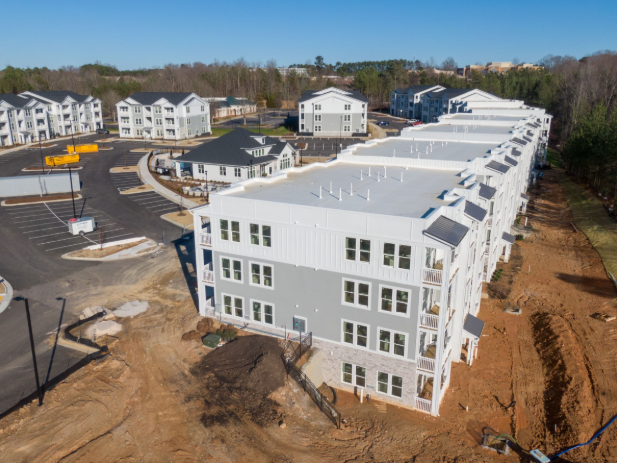
For a commercial property owner or facility manager, the roof is far more than just the top layer of a building. It is a complex shield that protects your inventory, your technology, and your people. In the world of commercial property management, the stakes are incredibly high; a single failure in the roofing system can lead to catastrophic interior damage, operational downtime, and a massive hit to your bottom line.
Choosing the right roofing material is a significant long-term financial investment. The material you choose dictates your building’s energy efficiency, its ability to withstand the volatile Illinois seasons, and its overall structural integrity for decades to come. For business owners throughout Chicagoland, the weather can be unforgiving, ranging from humid, scorching summers to bone-chilling, snowy winters. Understanding a flat roofing materials comparison is the first step toward a worry-free facility and to ensuring your capital investment is well spent.
TPO (Thermoplastic Polyolefin): The Modern Standard for Efficiency
If you’ve looked at a modern warehouse or retail center lately, you’ve likely seen a bright white roof. Chances are, that is TPO. Since its introduction in the 1990s, TPO has become one of the fastest-growing segments in the commercial roofing industry, and for good reason.
Reflectivity and Energy Savings
One of the primary drivers behind the TPO vs EPDM roofing debate is energy efficiency. TPO is naturally reflective. Its white surface reflects UV rays away from the building rather than absorbing them as heat. In the peak of a Chicago summer, this “cool roof” technology can significantly reduce the load on your HVAC system, leading to lower monthly utility bills.
Heat-Welded Seams
Unlike other systems that rely on tapes or adhesives, TPO membranes are fused together using high-heat robotic welders. This creates a monolithic, seamless surface. These heat-welded seams are actually stronger than the membrane itself, providing superior protection against leaks, the number one enemy of flat roofs.
Versatility
TPO is highly resistant to chemical exposure, oils, and microbial growth. It’s also flexible enough to accommodate a building’s expansion and contraction as temperatures fluctuate. For businesses seeking a balance between cost-effectiveness and high-tech performance, TPO is often the frontrunner.
EPDM (Ethylene Propylene Diene Terpolymer): The Durable “Rubber Roof”
While TPO is the high-tech newcomer, EPDM is the seasoned veteran. Often referred to simply as “rubber roofing,” EPDM has been a staple of the commercial industry for over 60 years.
Unmatched Durability and UV Resistance
EPDM is a synthetic rubber compound that is incredibly resilient. It is essentially immune to the damaging effects of ultraviolet radiation and ozone. While other materials might become brittle over decades of sun exposure, EPDM remains flexible. This makes it an excellent candidate for the flat roofing materials comparison if longevity is your primary goal, with many EPDM roofs lasting 30 years or more with proper maintenance.
Longevity in Cold Climates
In Northern Illinois, we deal with “thermal shock,” or the rapid expansion and contraction of materials during extreme temperature swings. EPDM excels here. Because it is black (though white versions exist), it absorbs heat during the winter, which can help melt snow and ice more quickly than reflective roofs. It maintains its elasticity even when the temperature drops well below zero, ensuring it won’t crack under pressure.
Simple Maintenance
Because EPDM has been around for so long, roof repair methods are well established and cost-effective. If a puncture occurs, it can often be patched quickly and reliably, extending the system’s life without requiring a full replacement.
Modified Bitumen Roofing: The Heavy-Duty Workhorse
For roofs that need to do more than just sit there — those that host heavy HVAC equipment, require frequent foot traffic, or support solar installations — modified bitumen roofing is often the superior choice.
Multi-Layer Redundancy
Modified Bitumen (Mod-Bit) is an evolution of traditional “built-up” roofing. It consists of multiple layers of bitumen (asphalt) that are “modified” with plastic or rubber polymers and reinforced with fiberglass or polyester mats. This multi-ply approach provides “redundancy.” If the top layer is scuffed or damaged, you still have several layers of waterproofing beneath it.
Asphalt-Based Strength
The asphaltic nature of Mod-Bit makes it incredibly tough. It has high tensile strength and is highly resistant to punctures and tears. If your facility requires technicians to be on the roof frequently to service equipment, the ruggedness of a modified bitumen system is a massive advantage.
Application Flexibility
Mod-Bit can be applied in several ways, including “hot-mopped” asphalt, cold-applied adhesives, or “torch-down” methods, in which the seams are melted together. This flexibility allows us to tailor the installation to the specific safety and structural requirements of your building.
TPO vs EPDM Roofing: Which Is Right for You?
When comparing flat roofing materials, there is no single “best” material; only the best material for your specific building. A refrigerated cold-storage warehouse has very different needs than a high-traffic medical office or an industrial manufacturing plant.
A “one-size-fits-all” approach simply doesn’t work for high-value commercial assets. Factors like roof slope, existing insulation, local wind patterns, and your long-term occupancy plans all play a role in the decision-making process.
Partnering with Chicagoland’s Premier Roofer
Navigating the complexities of modified bitumen roofing, TPO, and EPDM requires a partner. At C3 Construction, we provide excellence through top-of-class roofing, restoration, and emergency response. We are an award-winning local roofer based in Chicagoland, and we take pride in our stellar communication and unmatched customer service.
We understand that a roofing project can be a distraction to your business. That is why we manage every project as if it were our only job. From the initial inspection to the final walkthrough, your installation will be quick, efficient, and trouble-free. We don’t just install roofs; we provide peace of mind, and we stand firmly behind every square foot of our work.
Don’t leave your facility’s protection to chance. Contact C3 Construction today for a professional, comprehensive roof system evaluation. Let our experts help you choose the right material to protect your investment for the long haul.